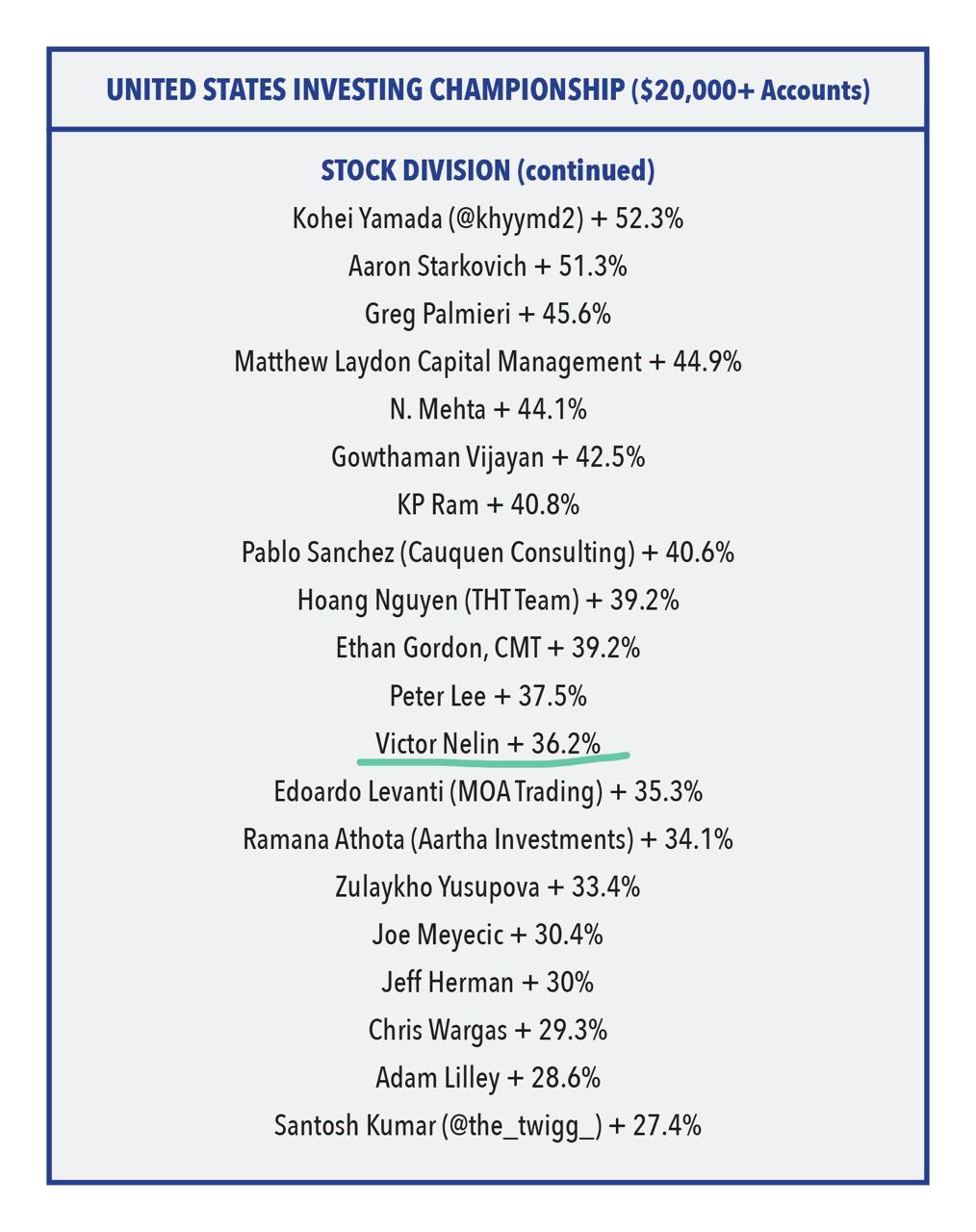
Two Consecutive Years in the U.S. Investment Championship: +36.2% in 2025
In 2024, I entered the U.S. Investment Championship for the first time and finished in the Top 20 with a +85.32% return. That result put Trend Alpha Corporation on the map as an independently verified active manager.
In 2025, I came back and did it again. Different market. Different conditions. Same process. The result: +36.2% in the USIC Stock Division, while the S&P 500 returned +17.9%.
One strong year can be luck. Two consecutive years of verified outperformance starts to look like a system that works.
2025 Was Not 2024
If you followed the markets in 2025, you know the year was nothing like 2024. Where 2024 offered a relatively smooth uptrend in U.S. equities, 2025 tested every participant with a completely different environment.
In the spring, the introduction of new tariff policies triggered a sharp selloff. The S&P 500 dropped nearly 19% from its highs. Headlines were dominated by trade war fears, recession calls, and widespread panic selling. Many active managers who had strong 2024 results gave back a significant portion of their gains.
Then the market reversed. As tariff rates were reduced through trade negotiations, stocks surged almost 39% off the April lows through year-end. The whipsaw caught both bears and bulls off guard.
This is exactly the kind of environment that separates process-driven managers from those who rely on a single market regime to generate returns.
How the Process Held Up
My approach at Trend Alpha Corporation did not change between 2024 and 2025. The methodology is the same: CAN SLIM stock selection, Volatility Contraction Pattern (VCP) entries, and strict systematic risk management.
What changed was how the process responded to different conditions.
During the spring selloff, the system did what it is designed to do: reduce exposure. When the broad market is in a confirmed downtrend and setups are failing, the rules require moving to a high cash position. This is not a discretionary decision. It is built into the framework.
When the market conditions improved and leading stocks began forming proper bases again, the system signaled re-entry. The strongest gains of the year came from positions initiated during the recovery phase, when most market participants were still paralyzed by the earlier selloff.
This is the core advantage of a rules-based approach: it removes emotion from both sides of the equation. You cut exposure when conditions deteriorate, and you re-engage when conditions improve. You do not need to predict what the market will do. You need to react to what it is doing.
The Numbers in Context
Here is a two-year comparison:
2024: Trend Alpha +85.32% | S&P 500 +25.0% | Outperformance: +60.3pp
2025: Trend Alpha +36.2% | S&P 500 +17.9% | Outperformance: +18.3pp
The 2025 return is lower than 2024 in absolute terms. That is expected. The market offered fewer high-conviction setups, and the system spent a meaningful portion of the year in cash to protect capital during the drawdown.
But the relevant metric is not the absolute return. It is the relationship between the return and the risk taken to achieve it. Beating the benchmark by 18 percentage points while holding significant cash through the worst selloff of the year reflects disciplined capital management.
Compounding both years, $100,000 invested in the Pure US Growth strategy at the start of 2024 would have grown to approximately $252,000 by the end of 2025. The same amount invested in the S&P 500 would have reached approximately $148,000.
Why Consistency Matters More Than Any Single Year
The investment management industry has no shortage of one-year outliers. Managers who took concentrated bets that happened to work, or who rode a single theme at the right time.
The question that matters for any investor allocating real capital is: can this manager repeat? Not the exact same return, but can they consistently apply a process that generates alpha across different market conditions?
Two years of USIC-verified results do not constitute a 20-year track record. I am not claiming that. What they do provide is something rare in the managed account space: independently audited evidence that the methodology produces results in both trending and volatile environments.
Combined with my six-year average annual return of approximately 25% on personal capital (2018–2024), the pattern is becoming harder to attribute to luck.
What This Means for Investors
If you are a high-net-worth individual or institutional allocator evaluating active equity managers, consider what the two-year USIC track record demonstrates:
• Verified, audited returns. Both years independently verified by the U.S. Investment Championship. Not self-reported. Not backtested.
• Consistency across different markets. +85.32% in a trending market (2024). +36.2% in a volatile, whipsaw market (2025). The process adapts.
• Capital preservation through drawdowns. While the S&P 500 dropped ~19% in the spring of 2025, the systematic risk rules reduced exposure and protected capital.
• Full transparency. Every client maintains direct ownership of their account and can verify every position in real time.
Looking Ahead
I will continue to compete in the U.S. Investment Championship. It remains the most credible way to publicly verify active management results, and I believe in submitting my process to that level of scrutiny.
The goal is not to chase a specific return number each year. The goal is to consistently apply a proven methodology, manage risk first, and let the compounding take care of itself.
That is the commitment I make to every investor who allocates capital with Trend Alpha Corporation.
Schedule a Conversation
If you are a qualified investor interested in learning how the Pure US Growth strategy could work for your portfolio, I welcome a 30-minute introductory conversation.
Visit trendalphacorporation.com to learn more and book a call.